Colleges, TVET & universities
Real depth for higher education — not a bolt-on
A university is not a secondary school with older students. It has faculties, programmes, credits, prerequisites, registration windows, a CGPA and a degree audit — and a vocabulary of its own. Chuo is built on that structure, and speaks that language everywhere.
The structure your registry actually keeps
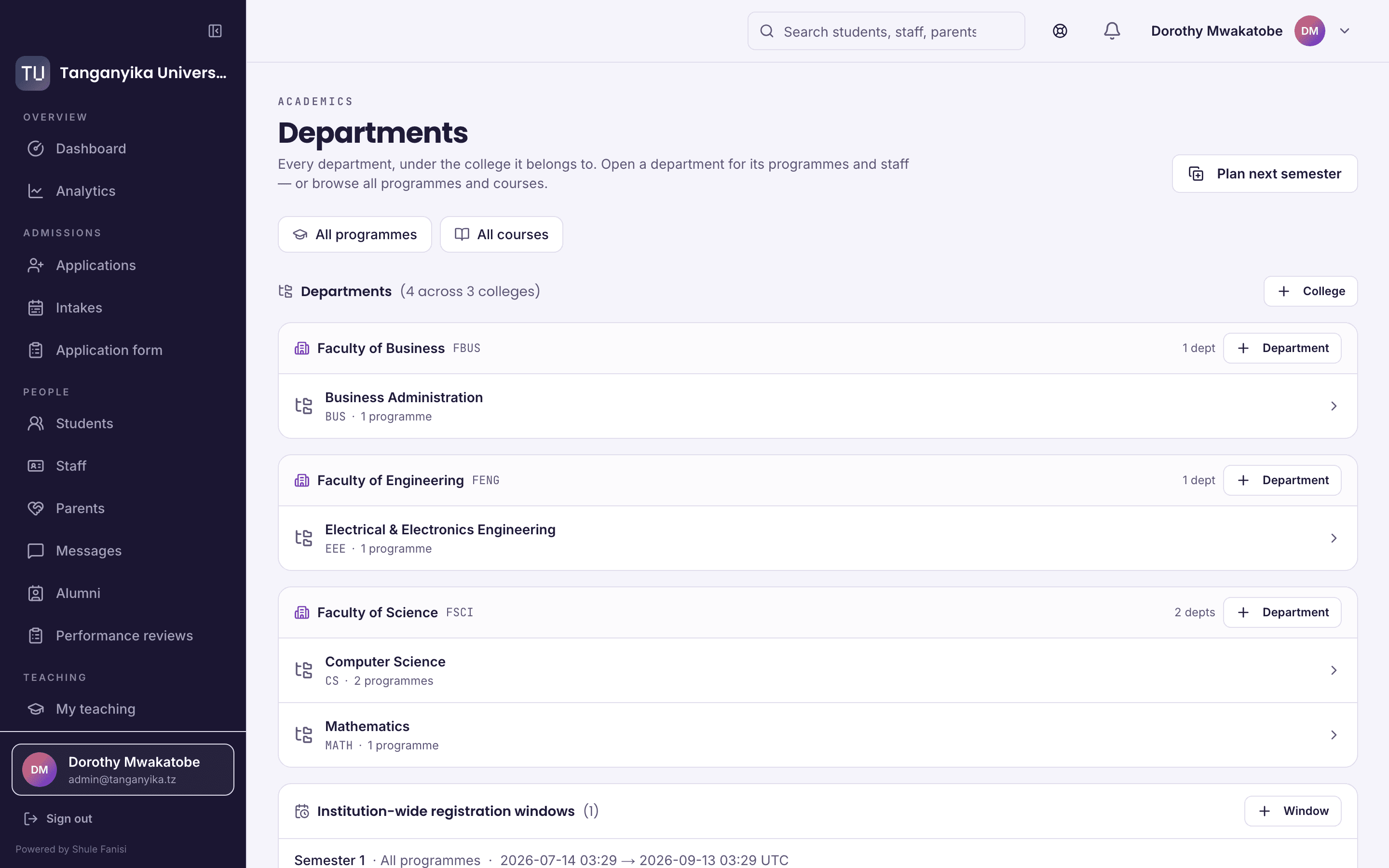
Faculty → department → programme → course → section, with credit values, prerequisites and the intake year as the spine. Your registrar builds it once and the rest of the system reads it.
- Faculties and departments, with heads who hold real permissions
- Programmes with a credit requirement and an award classification
- Courses with credit hours and prerequisite chains
- Sections with a lecturer, a capacity and a waitlist
Students register themselves
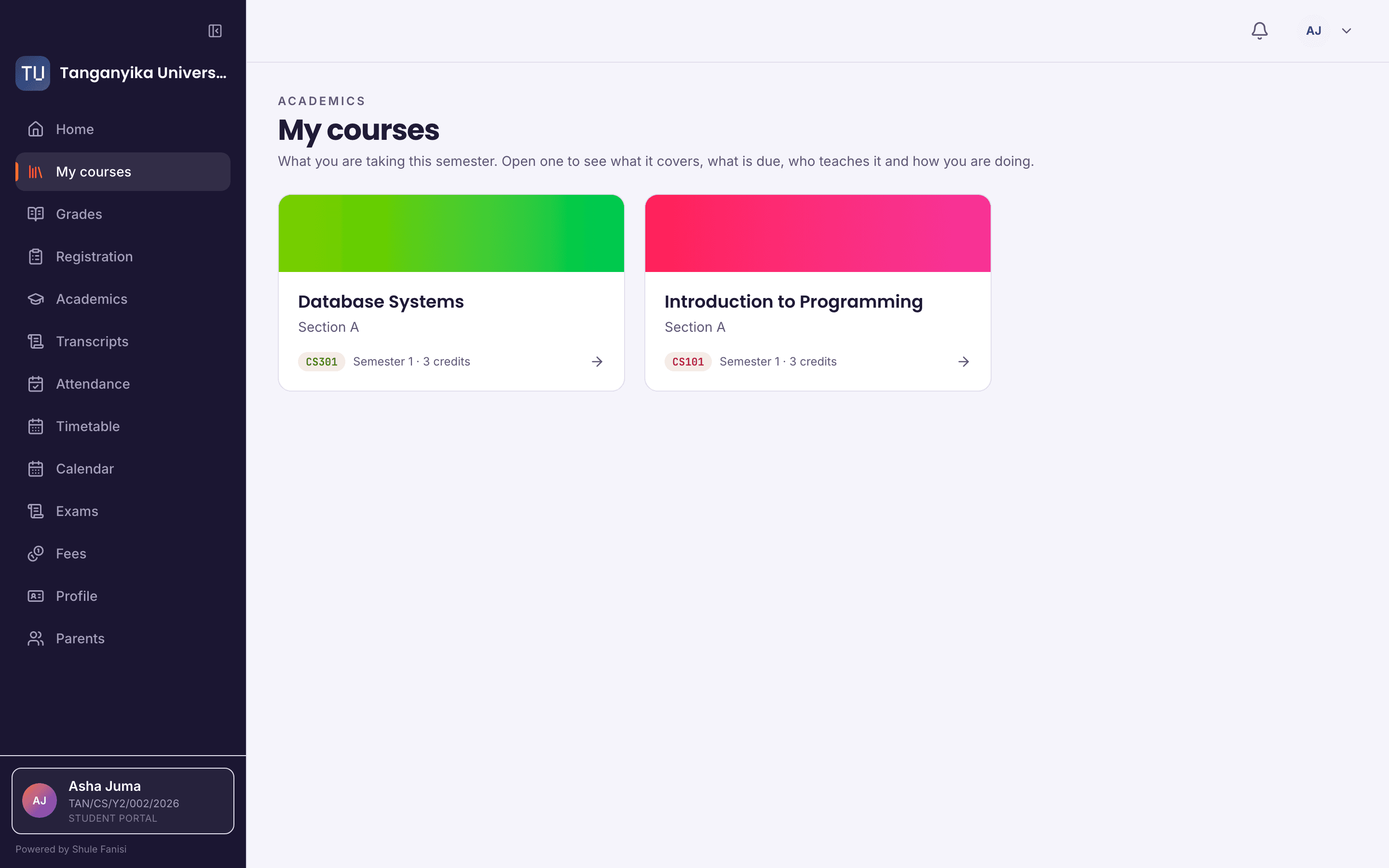
Open a registration window for a programme and students add and drop their own sections inside it — against prerequisites, capacity and a credit ceiling, with a waitlist when a section fills.
- Windows open and close per programme, per semester
- Prerequisites checked at the moment of registration
- Capacity and waitlist, with the position shown honestly
- Registered credits capped so nobody overloads by accident
From CGPA to conferral
Grades roll into a semester GPA, a cumulative GPA and an academic standing, and the degree audit measures it all against the programme's real credit requirement — so a student and their advisor know exactly what is left.
- Semester GPA, CGPA and credits earned versus attempted
- Academic standing recomputed each semester
- Degree audit with the projected award classification
- Transfer credits counted toward the requirement, not the GPA
- Transcripts, then conferral straight into the alumni directory

Vocational & TVET
VETA and NACTE, on their own terms
A training centre assesses competence, not a percentage — and calls its staff instructors and its students trainees. Chuo carries that vocabulary and that model.
Competence, modules and NTA levels
NTA levels with their own credit-GPA engine for NACTE, modular assessment for VETA, and a headline that reads “N of M competent” where a percentage would mean nothing.
- NTA 4–8 with the NACTE credit-GPA scale
- Module-level competence rather than a single mark
- Trainees, instructors and workshops — your words
- VETA and NACTE returns generated from your records
One product, seven kinds of institution
The tier is fixed when you register, from the levels your institution actually runs — so nothing in the product has to guess, and a student with an unusual record can never be shown the wrong kind of portal.
- Primary, O-Level, A-Level, vocational, undergraduate, postgraduate
- Mixed institutions supported — a school with a college arm
- Every noun follows the institution, on every screen
- The same login, the same permissions, the same audit trail
Also for higher ed
The parts a registry asks about second
Transcripts
Official and unofficial, with in-progress work marked as in progress rather than left blank.
Research supervision
Supervisors, candidates and milestones for postgraduate programmes. Included in Chuo Complete.
Alumni
A graduate joins the alumni directory the day the award is conferred — no separate re-entry.
TCU & NACTE returns
The statutory exports your regulator expects, built from the structure you already maintain.
Put your programmes on it
We set up your faculties, programmes and courses with you, on your own data, before you commit.